Shot Blasting
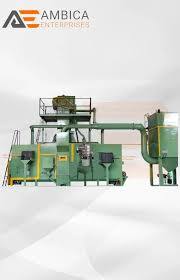
Shot Blasting
ISO 9001:2015
Factory Direct
Lifetime Support
Micro Shot peening: Guide to precision Cleaning & Finishing
Indicative price range
4,00,000 - 35,00,000
High-precision micro shot peening machine designed to induce compressive residual stress, dramatically increasing the fatigue life and strength of critical components like gears, aerospace parts, and springs.
Application
Gears, Spring, Medical Implants & Aerospace Parts
Blasting media
Micro steel shots/ Glass Beads
Control System
Automated PLC Control
Technical Data
Specifications of micro shot peening: guide to precision cleaning & finishing
Key machine parameters to help you evaluate fitment, throughput, and integration with your production line.
Use Cases
Industrial application of micro shot peening: guide to precision cleaning & finishing
Typical production environments and component types this machine is engineered to support.
Product Overview
Detailed about micro shot peening: guide to precision cleaning & finishing
In-depth technical and commercial information about this machine, applications, and operating advantages.
Micro shot Peening Machine: The complete Industrial Guide Introduction
In modern manufacturing, product quality is inextricably linked to surface integrity. Whether for automotive components, aerospace structures, medical devices, or precision instruments, meticulous surface preparation is the foundation of durability, performance, and long-term reliability.
The micro shot blasting machine provides the precision necessary for these high-stakes applications. While conventional blasting systems are designed for aggressive, heavy-duty cleaning, micro-blasting machines utilizes ultra-fine media to deliver a highly controlled surface treatment. This process removes contaminants, oxidation, and burrs while preserving the dimensional integrity of delicate or complex geometries.
Global industries rely on industrial shot blasting machines to optimize coating adhesion, refine surface topography, and significantly extend the service life of critical metal parts. This guide provides a comprehensive overview of micro shot blasting technology- exploring working principles, key benefits, industrial applications, and essential procurement considerations
What is a Micro Shot Blasting Machine?
A micro shot blasting machine is a high-precision surface treatment system engineered to propel ultra-fine abrasive media at high velocities. Unlike standard sandblasting equipment, this technology focuses on localized energy transfer, allowing for meticulous surface refinement without compromising the dimensional tolerances of the workpiece.
In the world of precision engineering, this machine is indispensable. By utilizing micron-sized media, it allows manufactures to achieve a uniform finish on intricate geometries and sensitive substrates that standard blasting methods would otherwise damage.
Key Industrial Applications & Functions
Micro shot blasting is a versatile process that serves several critical roles in the manufacturing lifecycle:
-
Precision Micro-Deburring: micro shot peening machines effectively removes burrs, flashing, and sharp edges generated during precision machining processes. This highly controlled operation preserves the dimensional accuracy and integrity of the base material while ensuring smoother, safer, and more reliable component performance.
-
Surface Decontamination: The process efficiently eliminates oxidation layers, heat scale, thermal discoloration, and other surface contaminants. By exposing a chemically clean and active surface, it prepares components for subsequent manufacturing operations such as coating, welding, bonding, or assembly.
-
Surface Texturing: Micro shot peening creates a uniform and controlled surface that acts as an ideal anchor pattern for coatings. This engineered texture significantly improves the mechanical bonding strength and adhesion performance of paints, planting, thermal sprays, and other protective surface treatment.
-
Fatigue Life Enhancement: By inducing beneficial compressive residual stresses within the surface layer, micro shot peening enhances resistance to fatigue cracking, stress corrosion cracking, and cyclic loading failures. This results in improved durability, extended service life, and greater reliability of critical components.
-
Aesthetic Surface Finishing: Micro shot peening machines deliver a consistent and refined matte, satin, or uniform textured finish across complex geometries. The process enhances visual appearance while maintaining tight dimensional tolerances, making it ideal for both premium consumer products and high-precision industrial applications.
How Does a Micro Blasting Machine Work?
The working principle of a micro shot blasting machine revolves around the “controlled kinetic Energy” transfer. Unlike aggressive traditional methods, the micro-blasting process allows for precise surface conditioning through a series of synchronized stages:
-
Component Loading & Fixturing
The process begins by placing the workpiece inside a reinforced blasting chamber. For high-precision parts, specialized fixtures or rotary tables are used to ensure that the abrasive stream reaches every intricate contour without manual interference.
-
Precision Media Acceleration
Ultra-fine abrasive media (such as glass beads, aluminum oxide, or fine steel grit) is accelerated using a highly regulated pneumatic system. The compressed air passes through a precision-bore nozzle, creating a concentrated “Micro-jet” that gives the operator total control over the impact intensity.
Target Surface Acceleration
As the high-velocity particles strike the substrate, they perform a multi-action treatment:
-
Advanced Substrate Decontamination:
Surface purity is the first step toward high-quality manufacturing. Micro-blasting operates at a microscopic level to ensure the base material is pristine.
-
Deep-Level cleaning: Ye process sirf dhool ya mitti nahi, balki heat-treat scale, carbon deposits aur stubborn oxidation layers ko puri tarah khatam kar deta hai jo chemical washing se bhi nahi nikalte.
-
Sterile Base Production: It produces a “chemically clean” surface without altering the metal’s core metallurgical properties. This is critical for medical implants and aerospace components, where even microscopic residue can lead to catastrophic failure.
-
Defect Prevention: By ensuring a contaminant-free surface, it prevents defects such as porosity or inclusions during subsequent welding, brazing, or soldering processes.
2 . Precision Mechanical Etching
The longevity of any coating is entirely dependent on the surface’s “topography.” Micro-blasting creates the ideal environment for bonding.
-
Engineered Anchor Patterns: The process creates a uniform “micro-tooth” or anchor pattern across the substrate. This significantly increases the surface area, providing more “grip” for paints, powder coating, or electroplating.
-
Superior Coating Adhesion: A perfectly smooth surface often leads to coating delamination or peeling. Mechanical etching ensures mechanical interlocking between the coating and the substrate, exponentially increasing the “pull-off strength.”
-
Achieving Specific Ra Values: Operators can achieve precise surface roughness levels, ensuring the product meets stringent industrial specifications and international quality standards.
-
Controlled Micro-peening Effect
Perhaps the most significant “hidden benefits” of micro-blasting is its ability to physically strengthen the part.
-
Compressive Stress Induction: As fine media strikes the surface at high velocities, it creates thousands of microscopic indentations. This action induces a layer of compressive residual stress on the surface.
-
Sealing Surface Pores: The process effectively “compacts” the surface, closing microscopic cracks and pores where fatigue failure or corrosion typically begins.
-
Enhanced Fatigue Resistance: By strengthening the surface layer through micro-peening, the component’s fatigue life and resistance to stress corrosion cracking(ssc) are significantly improved. This ensures that load-bearing parts, such as gears or springs, have a much longer service life.
-
Closed-Loop Media Recovery
To optimize operational costs, modern machines feature a media recycling system. After the impact, the used abrasive is suctioned into a separator where “good” media is filtered from the debris and returned to the storage hopper for reuse.
-
Advanced Dust Extraction & Filtration
A high-efficiency Dust-collection System maintains a negative pressure environment inside the cabinet. This ensures that fine particulate matter is captured, providing a clean line of sight for the operator and maintaining a safe, OSHA- compliant workspace.
Key Components of a Micro Shot Blasting Machine
A high-performance surface treatment system is only as good as its individual parts. Understanding these core components is essential for selecting a machine that meets your specific production throughput and quality standards.
-
High- Integrity Blasting Chamber
The blasting chamber is a heavy-duty, enclosed workspace designed for containment.
-
Wear-Resistant Lining:Premium cabinets are lined with manganese steel or high-density rubber to protect the structure from internal erosion.
-
Safety & Containment: It ensures a zero-leakage environment, protecting operators from high-velocity particles and maintaining an OSHA -compliant workspace.
-
Precision Blast Nozzle
The nozzle is the heart of the precision process, determining the focus and intensity of the abrasive stream.
-
Material Composition:Industrial nozzles are typically crafted from Boron Carbide or tungsten Carbide to withstand the constant friction of high-velocity media.
-
Orifice Geometry: The design of the nozzle controls the “hot spot” allowing for surgical precision on delicate components.
-
Advanced Abrasive Media System
This system manages the storage and consistent delivery of micron-sized media.
-
Pressure vessel technology: It utilizes a regulated pressure pot to ensure a pulse-free, steady flow of abrasive, which is critical for achieving a uniform surface profile.
-
Media-to-air ratio: Sophisticated systems allow the fine-tuning of the media mix to prevent clogging and ensure efficiency.
-
High-Efficiency Dust Collection & Filtration
A vital component for both safety and visibility.
-
Multi-stage Filtration: Modern collectors use cartridge filters with pulse-jet cleaning to remove airborne contaminants and microscopic dust.
-
Visibility Enhancement: By maintaining a negative-pressure environment, the collector ensures the operator has a clear line of sight for manual operations.
-
Closed-Loop Media Recovery Unit
Sustainability meets cost-efficiency in the recovery stage.
-
Cyclonic Separation: Reusable media is separated from dust and broken particles via a cyclone separator.
-
Economic Optimization: By recycling functional abrasive particles, this unit significantly reduces overhead costs and waste generation.
-
Intelligent PLC Control Panel
The “brain” of the machine that manages the entire surface preparation cycle.
-
Variable Parameter Control: Operators can precisely pneumatic pressure, cycle times, and media flow rates.
-
Automation Integration: High-end panels often feature programmable logic controllers that store “recipes” for different parts, ensuring repeatable results every time.
Why Invest in Micro Shot Blasting?
Adopting micro shot blasting technology is more than just a process upgrade; it is a commitment to zero-defect manufacturing. For industries where precision is a baseline requirement, this equipment offers several transformative benefits:
-
Superior Substrate Decontamination
Micro-blasting delivers a level of cleanliness that conventional methods cannot match. It reaches into the microscopic valleys of the metal to eliminate:
-
Persistent Oxidation & Scale: Removing heat-treat scale and thermal residues that interfere with conductivity.
-
Mile Scale & Carbon Deposits: Stripping away industrial by-products to reveal the true base metal.
-
Chemical Residues: Ensuring the surface is biologically and chemically sterile for medical or aerospace use.
-
High-Precision Profiling for Complex Geometries
Standard blasting is often too aggressive for “delicate” or “intricate” parts. Micro shot blasting is the specialized solution for:
-
Preserving Dimensional Integrity: Treating parts with tight tolerances without removing essential base material.
-
Uniformity: Achieving a perfectly consistent matte or satin finish across complex, 3D printed, or machined surfaces.
-
Optimized Coating Performance & Adhesion
The primary cause of coating failure is poor surface preparation. This machine eliminates that risk by:
-
Creating Engineered Anchor Patterns: Increasing the surface area to ensure a superior mechanical bond for powder coatings, PVD, and electroplating.
-
Eliminating Delamination: Drastically reducing the “peel-off” rate, which lowers the cost of quality rejections and returns.
-
Structural Integrity & Extended Service Life
Beyond aesthetics, this process strengthens the part from within:
-
Enhanced Fatigue Resistance: Through the micro-peening effect, the machine introduces compressive stress that prevents stress-corrosion cracking.
-
Increased wear Resistance: Hardening the surface layer to stand up to high-friction environments, significantly extending the component’s operational lifespan.
-
Operational Efficiency & Lower TCO(Total Cost of Ownership)
Modern industries systems are designed to be as profitable as they are productive.
-
Closed-Loop Media Recycling:By capturing and reusing functional abrasive media, businesses can reduce material consumption by up to 50-70%.
-
Reduced Labor Overhead: Automated blasting cycles deliver repeatable, high-volume results, freeing up skilled labor for other critical tasks.
-
Environmental Compliance: High-efficiency dust extraction ensures a clean, safe, and sustainable factory environment.
Critical Industrial Applications: where Precision Meets Performance
From deep-sea exploration to outer space, micro shot blasting technology is the gold standard for industries that cannot afford component failure. By delivering consistent surface topography, these machines solve complex manufacturing challenges across various sectors.
-
Aerospace & Defense
In an industry where safety and weight are paramount, micro-blasting is used to ensure the structural integrity of flight-critical components.
-
Turbine Blade Refinement: Removing thermal spray coatings or oxidation without altering the complex aerodynamic profiles.
-
Fastener & Actuator treatment: Enhancing the fatigue life of high-stress fasteners and landing gear assemblies.
-
Compliance: Helping manufacturers meet stringent AS9100 and aerospace quality standards.
-
Automotive Engineering
Modern automotive manufacturing relies on micro-blasting to optimize the performance of the powertrain and safety systems.
-
Transmission & Gears: Improving oil retention and reducing friction by creating precise, textured and safety systems.
-
Brake & Suspension Systems: Removing scale and preparing surfaces for high-performance anti-corrosion coatings.
-
EV Battery Components: Cleaning and profiling aluminum cooling plates for better thermal interface material (TIM) adhesion.
-
Medical Device & Implant Manufacturing
Surface finish is a critical factor for biocompatibility and the long term success of medical implants.
-
Orthopedic Implants: Creating a specific macro-roughness on titanium or cobalt-chrome implants to promote osseointegration.
-
Surgical Instrumentation : Providing a non-reflective, glare-free matte finish that is essential for visibility under high-intensity operating room lights.
-
Stent & Valve Deburring: Removing microscopic burrs from life-saving cardiac devices.
-
Electronics & Semiconductors
As components shrink, the need for precision grows. Micro-blasting is essential for delicate electronic assemblies.
-
Heat Sink Optimization: Increasing surface area on heat sinks to improve thermal dissipation.
-
Solder preparation: Deoxidizing lead frames and circuit board connectors to ensure high-conductivity solder joints.
-
Enclosure Finishing: Providing premium aesthetic finishes for high-end consumer electronics.
-
Precision Tool & Die Industry
Extending the life of expensive tooling is a direct way to improve a factory’s ROI.
-
Mold & Die Maintenance: Safely removing residue and buildup from complex injection molds without rounding off sharp edges.
-
Cutting Tool Enhancement: Preparing the “chip breakers” and flutes of carbide tools for PVD/CVD coatings to reduce wear and heat.
Machine Configurations: Selecting the Right Systems for Your Production
Micro shot blasting machines come in various configurations, each engineered to handle specific production volumes, part geometries, and levels of precision. Choosing the right “Type” is critical for optimizing your Total Cost of Ownership (TCO).
1. Manual Micro Shot Blasting Cabinets:Perfect for low-volume production, R&D labs, and intricate rework.
-
Operator Control: Allows for high tactile feedback, making it the best choice for delicate parts that require visual monitoring during the blasting cycle.
-
Application: Ideal for customized medical implants, aerospace component repair, and specialized tool-and-die maintenance.
2. Semi-Automatic Systems:A versatile middle ground that balances human expertise with mechanical consistency.
-
Enhanced Throughput: These machines often feature rotating turn-tables or tumbling baskets, allowing the operator to load parts while the machine handles the uniform surface treatment equipmetns .
-
Application: Best for medium-scale manufacturing batches where part geometries are consistent but still require manual inspection.
3. Fully Automated Conveyor/In-line Systems:Engineered for high-volume, 24/7 production environments where speed and zero-error repeatability are the priority.
-
Seamless Integration: These systems can be integrated directly into an existing production line, utilizing belt or overhead conveyors to move parts through the blasting stream at a constant rate.
-
Application: Mass-production of automotive engine parts, fasteners, and high-volume electronics housings.
4. Rotary Table Micro Blasting Machines:Designed for maximizing workpiece density per cycle.
-
Simultaneous Processing: Multiple components are placed on a rotating satellite table, ensuring that the abrasive stream hits every angle of the part with 360-degree coverage.
-
Application: Precision gears, circular valves, and complex symmetrical components that require a uniform surface profile.
5. CNC & Robotic Shot Blasting Systems:The pinnacle of Precision Engineering.
-
Programmable Precision: Using multi-axis robotic arms or CNC logic, these machines follow a pre-programmed path to treat complex 3D geometries with surgical accuracy.
-
Application: Flight-critical aerospace structures and turbine blades where the Ra (surface roughness) values must be identical across every square millimeter of the part.
How to Choose the Right Micro Shot Blasting Machine
Selecting the right machine requires careful evaluation of several factors.
- Production Volume:Choose manual machines for small batches and automatic systems for large-scale production.
- Component Size:Ensure the machine chamber can accommodate your workpieces comfortably.
- Abrasive Media Compatibility:Different applications require different media types, verify compatibility before purchasing.
- Dust Collection Efficiency:An efficient dust collection system improves safety and operational performance.
- Automation Requirements:Businesses with high production demands should consider fully automatic systems.
- Manufacturer Support:Working with a trusted micro shot blasting machine manufacturer ensures reliable service, spare parts availability, and technical support.
Future of Micro Shot Blasting Technology
As manufacturing becomes more advanced, micro shot blasting machines continue to evolve.
Emerging trends include:
-
Smart monitoring systems
-
loT-enabled machines
-
Automated process control
-
Energy-efficient operations
-
Advanced abrasive recycling systems
-
Industry 4.0 integration
These innovations are helping manufacturers improve productivity, reduce costs, and maintain superior quality standards.
Conclusion
A micro shot blasting machine is one of the most effective solutions for precision surface preparation, cleaning, deburring, and finishing. By using fine abrasive media, manufacturers can achieve exceptional surface quality while protecting delicate components from damage.
From automotive and aerospace industries to medical and precision engineering applications, these machines play a critical role in enhancing product performance, coating adhesion, and long-term durability.
Businesses looking to improve manufacturing quality and operational efficiency should consider investing in a reliable industrial shot blasting machine that meets their production requirements and future growth objectives.
The Ambica Advantage
Why Buyers Choose Us
End-to-end support from machine selection to commissioning and after-sales service.
Custom Engineering
Configurations tailored to your component size, material, and surface finish targets.
Quality Tested
Pre-dispatch performance checks for blasting efficiency, safety, and reliability.
Export Ready
Documentation and logistics support for domestic and international shipments.
Dedicated Support
Technical guidance for installation, operation, spares, and maintenance.
FAQs
Frequently Asked Questions
Answers about this machine, installation, and support.
Micro Shot Blasting: Guide to precision Cleaning & Finishing is engineered for Precision micro shot peening machine, Enhanching Life & Component Strength, High-durability boron carbide nozzles, 0.05 mm to 0.3 mm within industrial surface preparation workflows. It helps remove scale, rust, and contaminants while improving surface profile for coating or further processing. Ambica configures chamber size, abrasive system, and recovery based on your component geometry and daily output.
The typical price range for Micro Shot Blasting: Guide to precision Cleaning & Finishing is 4,00,000 to 35,00,000 (depending on Automatic & specifications). Final quotation depends on machine size, automation level, dust collector capacity, and optional accessories. Share your component dimensions and production target to receive an engineering-led estimate with scope clarity.
Yes. Ambica can tailor Micro Shot Blasting: Guide to precision Cleaning & Finishing for your material type, part size, loading method, and finish requirement. Customization may include table or hanger design, blast wheel or nozzle layout, abrasive recovery, and electrical controls. Our team reviews your sample parts and cycle time before recommending the right build.
Installation planning, foundation guidance, and commissioning support are available for Micro Shot Blasting: Guide to precision Cleaning & Finishing. We assist with alignment, trial runs, operator orientation, and basic troubleshooting so production can start safely. Remote and on-site support options can be discussed at the time of order confirmation.
After-sales support for Micro Shot Blasting: Guide to precision Cleaning & Finishing includes spare parts guidance, wear-part replacement schedules, and technical assistance for performance optimization. Our service team helps with abrasive selection, preventive maintenance, and uptime improvement across the machine lifecycle.